Today on the IAML (UK & Irl) blog: Emily Peart shares research findings on brass band librarianship practices, conducted for her MA in Library and Information Studies. First presented at IAML’s Annual Study Weekend in April, Emily’s important research highlights concerns for long-term sustainability of brass band composing and makes recommendations for improvement. Emily writes:
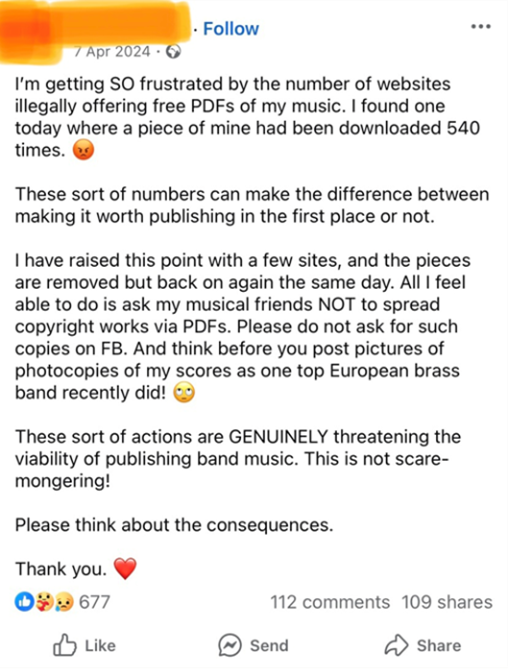
I am alive because of brass bands; I’ve been playing a brass instrument for 78.1% of my life and I am currently the Chairperson of a brass band. I have been immersed in the culture of brass bands for my entire life, which has given me an understanding of its rich history and community make-up but also, of its foibles. When considering topics for my Library and Information Studies MA dissertation research, I didn’t have to consider for very long. In April 2024 a prominent brass band composer posted on Facebook asking bands to stop spreading and asking for copyrighted musical works online as it is threatening the viability of publishing band music. Having seen the practice of copyright infringement first-hand but having not fully considered the impacts on the movement’s composers, I had my topic.
Before I get into the nitty gritty of the research, I first must provide some contextual information.
Brass Bands 101
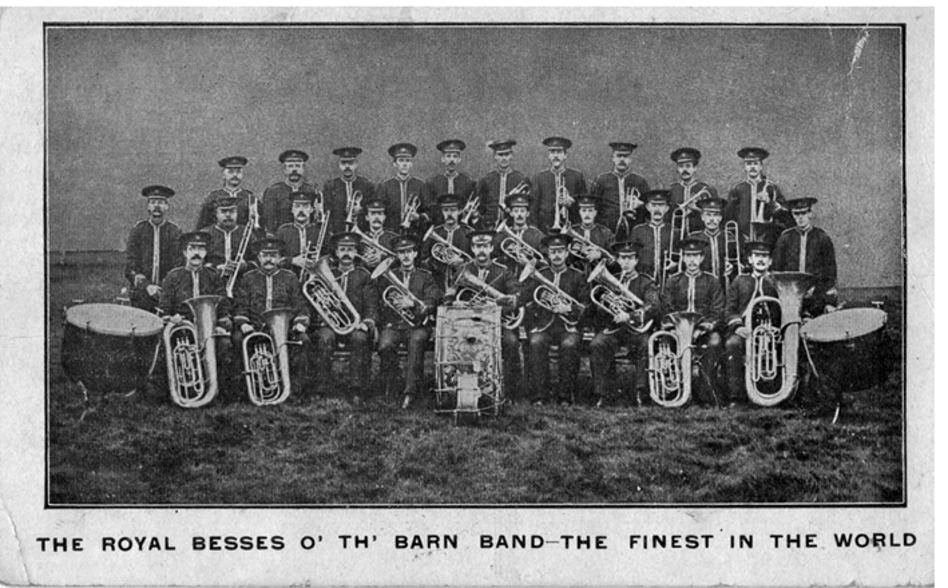
The British ‘Brass Band’ was born in the early nineteenth century. Created with the purpose of bringing moral enlightenment to the Victorian working class, it brought together instruments that had previously only been used in village, church and military bands. While termed ‘British’, geographically brass bands cover the entirety of the UK. Comprising twenty-five players, the instruments range in pitch and the number of each instrument is fixed to the following: one soprano cornet, nine cornets, one flugel horn, three tenor horns, two baritone horns, two tenor trombones, one bass trombone, two euphoniums, and four basses (tubas).
Flourishing in industrial areas, they were financially supported by local enterprises in return for advertisement. These origins can still be seen today, with many including words like ‘temperance’ or ‘colliery’ in their names or, like the Ellington Colliery Band, named after a closed factory, mine or mill.
British brass bands didn’t stay in Britain either, due to imperialism and the Salvation Army, Australia and New Zealand, Tonga, India, and Zimbabwe, all have brass band communities that continue to thrive post-independence. Despite their global presence, the nuanced long-standing culture and technical skill amongst its players, brass bands rarely receive recognition within the western art tradition.
Brass band composition has an equally long history, the first brass band piece being published in 1836. Brass band composers came exclusively from within the movement until 1928 when Gustav Holst was commissioned to write the test piece A Moorside Suite (Allen, 2017). This set a trend of notable composers writing for the medium, including Sir Arthur Bliss, Sir Edward Elgar and Ralph Vaughn Williams. Brass band composers also create and publish arrangements of works from other genres of music; from Ticket to Ride to Holst’s The Planets Suite, there is little the brass band arranger will not attempt.
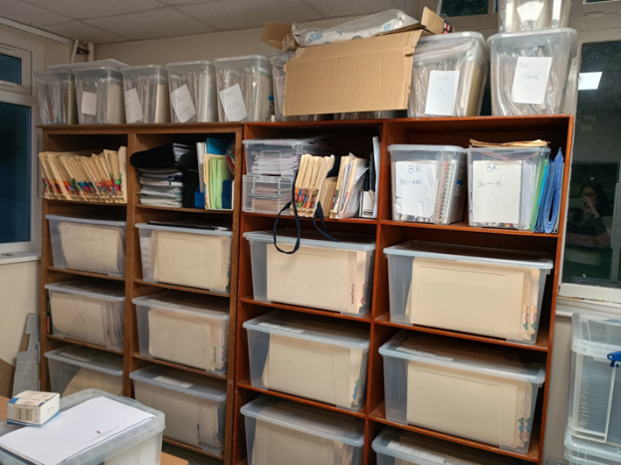
Outside of competing, brass bands regularly perform in their local communities. Every band must have enough music to cater for a variety of events and audiences, from formal concerts to Saturday afternoons in the park. Unlike amateur orchestras and choirs, there is minimal provision for brass band set lending, leading to bands having their own music libraries. To manage their collection, bands have their very own music librarians. It is a voluntary role that doesn’t require any prior knowledge of library or information management. Critically, they receive no training about copyright law and how it is applied to sheet music.
The Nitty Gritty
The aim of the research was to understand the copyright perception and practices of amateur brass band music librarians and investigate out the counter views of composers, to see how they were being affected by copyright infringement. To do this I created and circulated a survey aimed at brass band music librarians and interviewed three active brass band composers.
Based on the questionnaire results, copyright literacy levels are low amongst brass band music librarians, lower than that demonstrated by professional librarians in the literature. Perceived knowledge was also greater than actual knowledge. Many brass band music librarians indicated they infringe copyright through unlicensed photocopying, digital collections, and peer-to-peer sheet music sharing via social media, despite several of them acknowledging that the community’s infringement practices had the potential to discourage brass band composers. Composer interviews indicated that these practices were occurring within the community before the advent of social media, or online file sharing and storage.
There were multiple complex drivers behind copyright infringement: high passion for music, an inability to purchase individual parts, lack of education, lack of enforcement of compliance, no music licensing options, and increasingly difficult financial circumstances coupled with few seeing their infringement practices as ‘criminal’. These have allowed a culture of infringement to proliferate. A copyright misconception became apparent, namely that if a band had legally purchased a set of physical music, they were allowed to make copies for internal distribution. Even questionnaire respondents who considered themselves ‘Extremely’ knowledgeable of copyright fell afoul of this misconception. It highlighted the disconnect between brass band music librarians’ actions and awareness that they are breaching copyright law, suggesting that the motivations behind infringement was not malice or purposeful deception, but stemmed from a place of ignorance and a wish to help one’s community.
Brass band composers perceive that they are affected by copyright infringement. Their interviews combined with the results of the questionnaire indicate that they not only perceive it but that they categorically are being affected by infringement. Having not been subject of prior study, there is nothing in the literature with which to compare their experiences, but they painted a harrowing picture of financial adversity, stifling community dynamics and the undermining of brass band publishing.
Time to Stop the Red Rot
Brass bands often discuss how to remain relevant to new audiences and attract young players, aware that both affect the long-term sustainability of the brass band movement, but they are unaware that their infringement is putting the movement at further risk by alienating the very group that provide them with music to play in the first place. The blame can also not be solely placed at the brass band music librarian’s feet; they are perpetuating a longstanding cultural norm that isn’t questioned within the community at any level.
However, all hope is not lost. Education will be one critical way to turn the seemingly unceasing tide of infringement. After further composer interviews, I’m going to attempt the following:
- General raising of awareness of the issue.
- Copyright education initiatives led by national brass band governing bodies, engaging bands on the topic of copyright, and carefully considered to be practically applicable to the challenges and specific requirements of brass bands.
- The development of a licence to legally allow digital libraries through lobbying by national governing bodies.
- The establishment of an official brass band music library that, amongst other things, facilitates set lending, has its own version of a public lending right for the living composers within the library’s holdings, encourages copyright education for brass band music librarians and composers, and supplies legally licensed photocopies, supported and facilitated by the national brass band governing bodies.
- Collaboration between the national governing bodies and PMLL to produce a licence suitable for the brass band movement, allowing for legal photocopying and limited arranging, facilitated by my hypothetical brass band music library.
- The establishment of an Association of Brass Band Composers and Arrangers.

It must be made clear to bands that the current attitude towards infringement is negatively impacting composers, they must understand the long-term consequences of infringement and what bands can do to improve. Ethical choices must be made to ensure the long-term health of the brass band movement, adjusting the balance between band and composer and turning brass band music librarians from foe to friend.