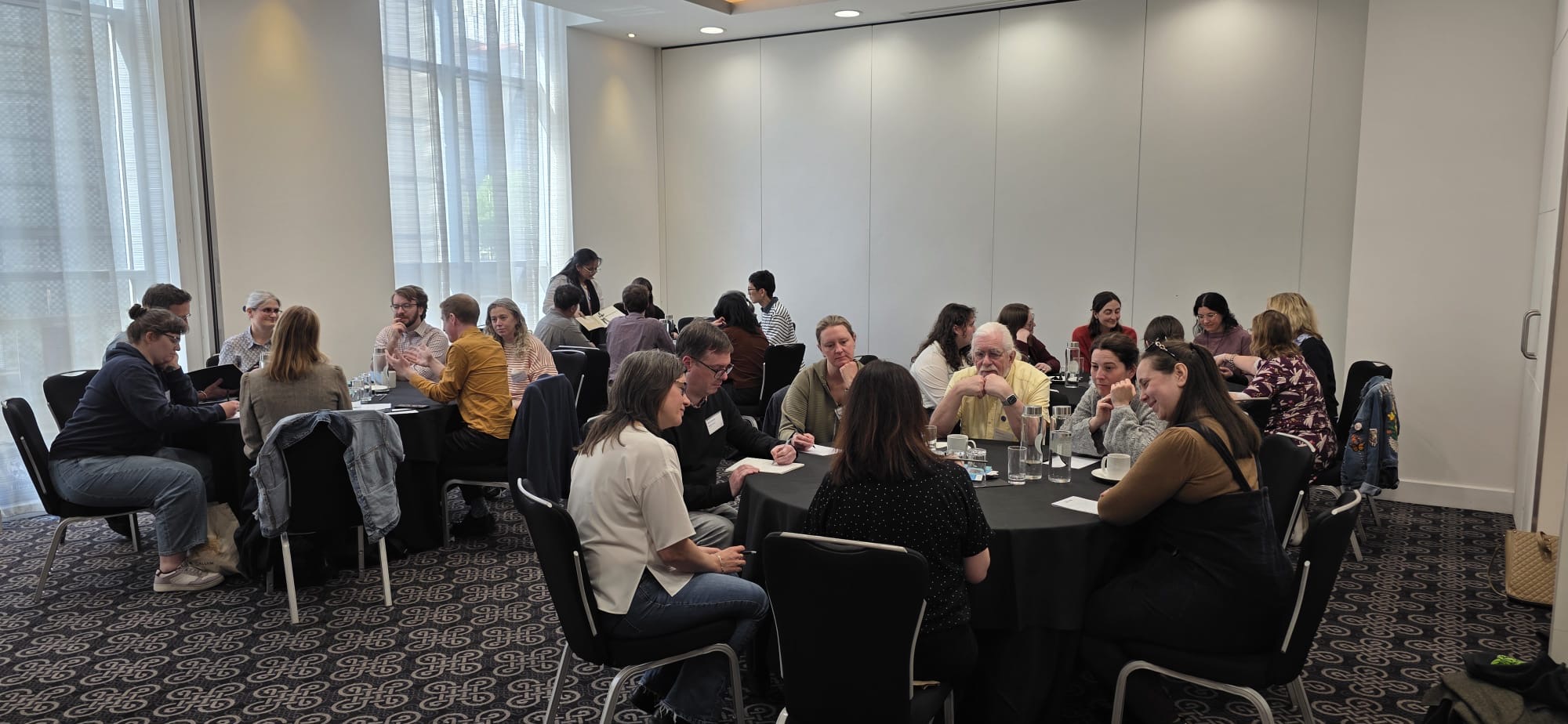
Today on the IAML (UK & Irl) blog: Yi-Chieh Chiu of the University of Edinburgh and Edinburgh Central Library reflects on his experience as a first-timer at IAML (UK & Irl)’s Annual Study Weekend, which took place in Cardiff in April. Yi-Chieh writes:
My first visit to Wales coincided with my first IAML (UK & Irl) Annual Study Weekend (ASW), an experience that proved as much a conceptual inquiry as a professional induction. There was a certain poignancy to the timing; as we gathered, the University of Cardiff’s School of Music was on the cusp of transitioning into the newly merged School for Global Humanities. This backdrop of departmental amalgamation lent a particular weight to our discussions, sharpening questions of how disciplines intersect and how music libraries might operate within and across these fluid boundaries. We were there to explore the constructive, often quiet roles that music libraries play for practitioners and scholars, even as the academic landscape shifts beneath our feet.
Coming to the conference as a “humanities deserter” with earlier engagement in the visual arts and a relatively short history in the music library sector, I found myself instinctively translating what I heard into experiences drawn from both academic and creative environments. Over three days, the programme moved across copyright, cataloguing, user engagement, interlibrary loans, and the increasingly polemical question of AI. Yet what stayed with me was not simply the range of topics, but a growing awareness of the hidden versatility of music librarians. Music librarianship, as several speakers made clear, is a relatively compact field with limited resources; precisely for this reason, its practitioners must become multi-hyphenates—navigating between institutional rigour, scholarly demands, and the mercurial needs of the creative industry. The music library is thus reconfigured: it is no longer just a storehouse, but a liminal space where different strands of knowledge meet and give rise to new forms.
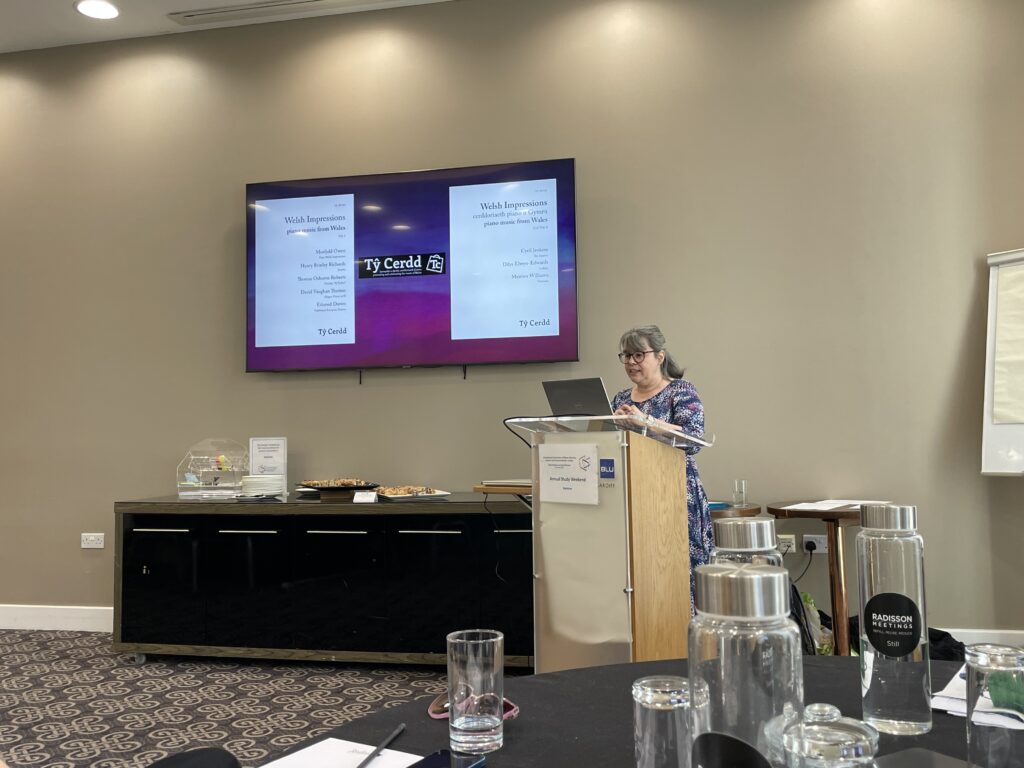
This became particularly evident in projects that relied on sustained cross-professional collaboration. Zoe Smith’s work, developed in partnership with Tŷ Cerdd (Music Centre Wales) and other institutions, offered a vivid example. Through meticulous archival research and painstaking comparison of manuscripts, Smith is reconstructing twentieth-century Welsh piano works that have yet to be edited, published, performed, or fully studied. What struck me was not only the rigour of the research, but the interconnected ecosystem supporting this work: archivists, institutional partners, and performers all contribute to the reactivation of a repertoire that might otherwise remain dormant. Her intention to extend the project beyond Wales, reaching diasporic communities in places such as Massachusetts and Patagonia, further suggests how cultural memory is dispersed, negotiated, and potentially recovered through collective effort.
This potential for synergy is perhaps most vividly realised when the library’s holdings are viewed through the lens of material culture. Professor Kiera Vaclavik’s Alice Sound project offered a compelling example, bringing together an academic, a composer, and a visual innovator. What resonated most with my own background was Vaclavik’s treatment of the printed score not merely as a vehicle for sound, but as an aesthetic object of social significance. In her analysis, these scores become cultural artefacts—historically used to signal taste, education, and aspiration within domestic settings. Such a perspective positions the music library not simply as a repository of sound, but as a site where visual, material, and sonic histories intersect.
This cross-pollination is not reserved for external researchers; it is often driven by the latent expertise of library staff themselves. Laura Johnson’s work with the Leeds Conservatoire archives is a case in point [editor’s note: as featured in a recent IAML blog post!]. By applying a visual sensitivity likely honed during her cinema and film studies at the University of Manchester, Johnson catalogued logos, typography, and graphic elements found in the institution’s holdings, and translated them into contemporary merchandise. It was a sophisticated transformation of the archive into a brand. While modest in scale, Johnson’s creative intervention echoed broader curatorial strategies familiar in museums and galleries, particularly in East Asia, where the “edited” collection is given a second, commercial life. Rather than treating the archive as a static repository, her work demonstrates how it can be reactivated as a source of institutional identity, suggesting that expertise acquired in one discipline can be productively re-applied in another, often in ways that are unforeseen.
This need for professional versatility is also evident in less visible, but equally critical areas of practice. Emily Peart’s discussion of the legal intricacies surrounding brass band collections offered a reminder that copyright is not merely an administrative hurdle, but a mechanism for safeguarding the cultural heritage of communities that have often remained outside the academic mainstream. In this context, legal knowledge becomes another form of cross-professional expertise—one that shapes not only access, but also preservation and representation.
Rather than providing clear or immediate solutions, the conference raised a series of questions that, though unanswered, continue to stimulate the imagination. Listening to Zoe Smith’s reconstruction of David Harries’s piano works, I found myself wondering how we might situate such mid-century figures within the wider sonic and cultural landscape of the North Atlantic world. Just as art historians understand painters through the prism of cross-regional developments beyond their immediate locality, can musicologists—and by extension, the librarians who support them—draw more deeply from the analytical approaches of art history?
This curiosity extends to the mechanics of the collaborations themselves. The Alice Sound project, with its animated toy theatre and multi-sensory output, left me questioning the role of library professionals within these high-stakes cross-professional experiments. Can a staff member, intimately acquainted with the idiosyncratic depths of a collection, play a more proactive, perhaps even curatorial or co-creative, role in these partnerships?
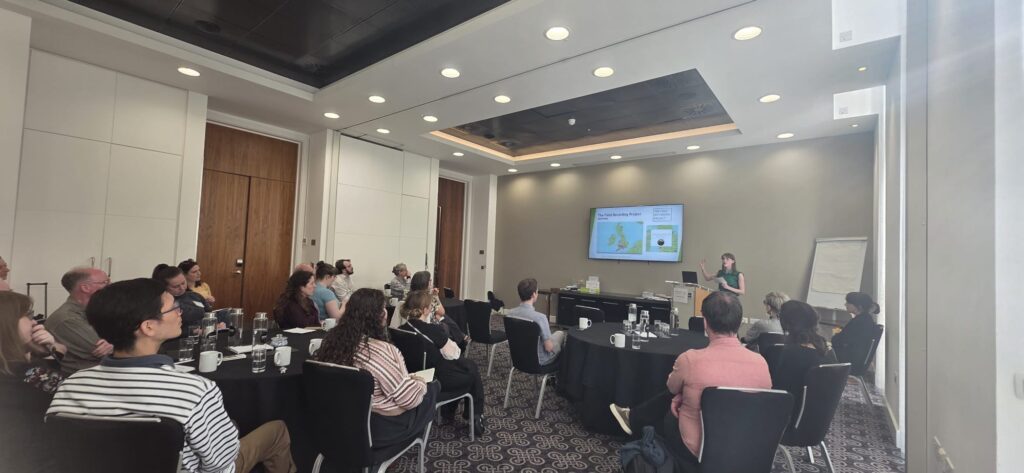
A related line of thought emerged through a different, more environmental lens. Ella Roberts’ presentation on acoustic ecology immediately brought to mind the environmental art practices I had encountered in the visual art sector. It led me to reconsider: could we invite sound artists, who are preoccupied with the morphology of their surroundings, to collaborate with music students? Perhaps the library is the ideal, neutral space to learn and practise “reduced listening”, dissecting the intrinsic nature of sound away from its external context. With careful planning and the involvement of experienced practitioners, such a space could foster heightened sensory and environmental awareness.
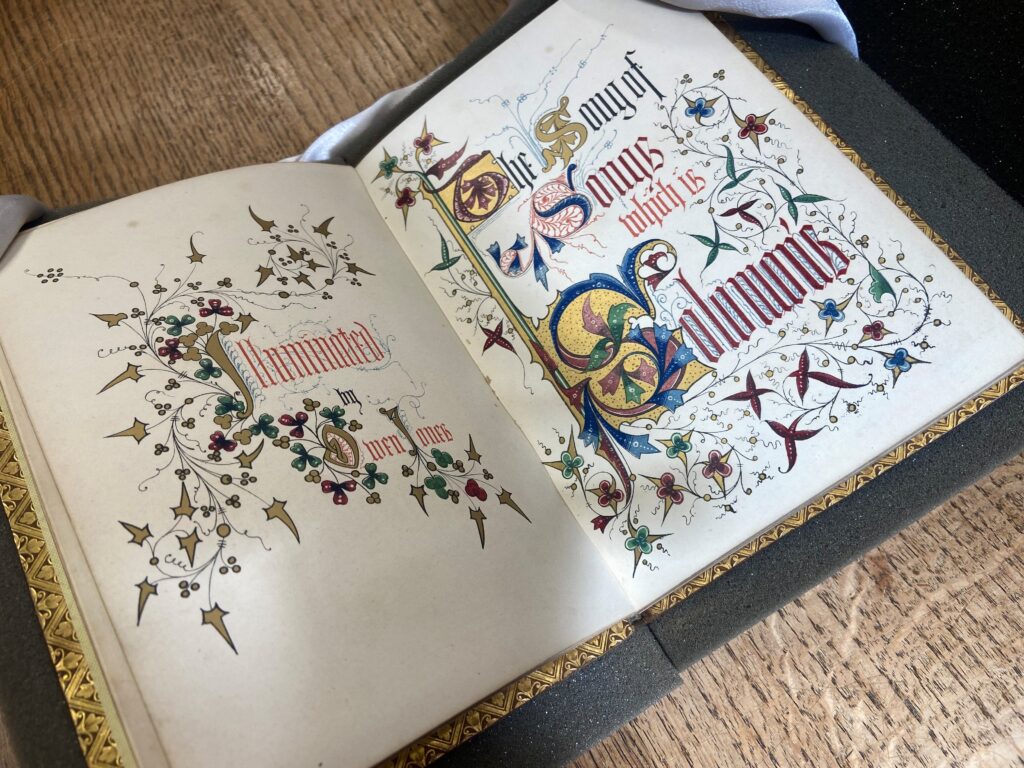
This same impulse to re-contextualise the auditory also applies to the material. As I reflected on Vaclavik’s session on antique sheet music and Lee Noon’s call to revive Victorian ballads, I found myself imagining a future collaboration with colleagues working with art collections. There is a clear opportunity to exhibit our under-represented score collections as visual artefacts, bridging the gap between the conservatory and the art school. By adopting the integrative approach found at the Royal Welsh College of Music and Drama, we might weave these collections into the curriculum, encouraging students to engage with these materials not just as listed resources, but as tactile objects to be understood and studied by hand.
Time to explore Cardiff itself was limited, often leaving little room to play the tourist. Yet, the IAML event cleverly turned the host city into a living archive. From the National Museum’s lithographic prints—those prints of Victorian devotional hymns and prayers that speak so graphically of the Celtic Revival—to the “speed dating” sessions that offered a rapid-fire tour of local treasures in the hotel, the host city was ever-present.
If the formal programme provided intellectual stimulus, the more informal aspects of the weekend proved equally instructive. After hearing Peter Linnitt’s restrained but deeply felt discussions, I searched for his videos and writings on the Royal College of Music’s manuscripts and found in them a model of intellectual clarity and care. A chat with Lee Noon in the short lunch sparked my interest to visit the Leeds Central Library. The weekend, defined by the generosity of shared expertise, made me want to know what other colleagues are doing in other institutions, cities, and nations.
I returned to Scotland, still unsure whether my current roles allow for the immediate adoption of everything I had learned, yet with a deep sense of gratitude for the glimpse into my colleagues’ worlds beyond Edinburgh. A week after the trip, it is not the PowerPoint slides that remain most vivid, but the sensory memory of a personal visit in the Cardiff Market. The rhythm and “sonic flow” of that space—the animated, unguarded, and at times lyrical chatter of the breakfast diners—linger in my mind. It was a reminder that music, and the libraries that house it, are ultimately about that same human pulse: a desire to connect, to revive the past, and to find resonance in the present.